Quick answer: Shorter cranks reduce the circle traveled by the pedal. That can reduce peak hip and knee flexion and create room in an aerodynamic position, but it does not manufacture watts. The correct question is whether a different crank length improves the whole swim-bike-run system for a specific athlete.
What the evidence actually says
A 2025 crossover study in trained male cyclists found no meaningful difference in cycling economy or sprint power among 165, 170, and 175 mm cranks, although perceived fatigue was lower with the two shorter options. A 2026 kinematics study found that small crank reductions decreased hip and knee flexion without changing mean power. A systematic review of cycling-position research concluded that evidence is too weak for a universal crank-length prescription.
Why triathletes care about hip closure
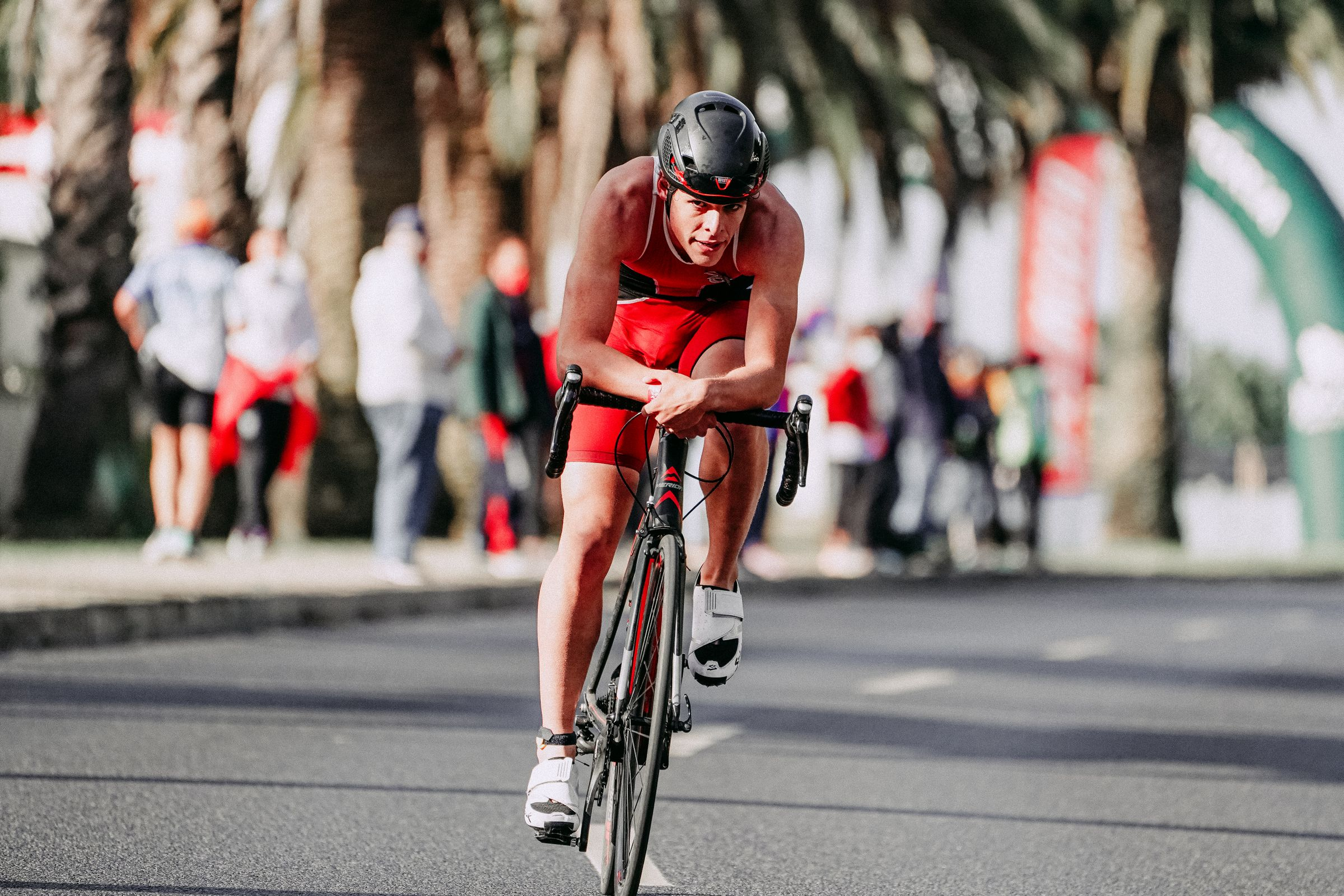
A low front end, long crank, and high knee at top dead center can crowd the hip and encourage pelvic rocking or an early exit from the aero position. Shorter cranks may open that angle while preserving saddle height relative to the bottom of the stroke. But changing crank length changes fit coordinates; bolting on new arms without revisiting saddle height and cockpit reach is not a controlled experiment.
What may change on the road
At the same gear and speed, shorter cranks usually require slightly more angular velocity for the same pedal speed. Many riders naturally settle into a modestly higher cadence. Comfort, torque sensation, front-end position, and shifting habits may change even when laboratory efficiency does not. The run benefit is plausible through comfort or pacing, but it is not guaranteed by crank length alone.
A three-step field test
First, compare ten-minute steady blocks indoors at matched power and cadence while recording heart rate, RPE, hip or knee discomfort, and pelvic stability. Second, ride 45–60 minutes in the intended aero position. Third, add a controlled 15–20 minute brick run. Use the same saddle, shoes, cleats, and intensity; adjust saddle height with a qualified fitter when crank length changes.
Keep the decision reversible
Borrow components or use an adjustable fit bike before buying a new crankset and power meter. A successful change should improve comfort or aero-position time without degrading control, power, or run quality. If the rider simply prefers the feel, that is useful—but preference should not be relabeled as proven aerodynamic speed.
Coach’s field checklist
- Have a fitter recalculate saddle height and review fore-aft position.
- Compare matched-power blocks, not different routes on different days.
- Measure time in aero, comfort, cadence, power, and brick-run feel.
- Stop and reassess with new numbness, focal knee pain, or loss of bike control.
Common mistakes
- Changing several variables at once and crediting the favorite one.
- Copying an elite protocol without matching context.
- Treating a laboratory average as an individual promise.
- Waiting until race week to test execution.
- Ignoring sleep, energy availability, illness, and training load.
Coach’s bottom line
Use evidence to frame a controlled decision, then let repeatable athlete response decide whether the idea earns a permanent place. The goal is a plan that still works when goggles fog, bottles bounce, and the legs begin submitting formal complaints.
FAQ
Will shorter cranks make me faster?
Not automatically. They may improve fit or comfort, which can help an athlete hold an effective aero position.
Do I need to raise the saddle?
Usually the saddle must be adjusted to preserve extension at the bottom of the stroke; use a qualified fit process.
Will cadence increase?
It may rise modestly, but cadence should emerge from the rider, gearing, and task rather than a forced target.
Can shorter cranks fix hip pain?
They may reduce hip flexion, but pain requires assessment of load, position, mobility, and clinical factors rather than a component-only diagnosis.
Related AltaBrio guides
Image suggestions
Hero image: Adult age-group triathlete and coach testing shorter cranks for triathletes.
Alt text: “Triathlete and coach testing shorter cranks for triathletes.”
Supporting graphic: Evidence, rehearsal, measurement, and decision steps.
Alt text: “Four-step decision process for shorter cranks for triathletes.”
Sources
- Crank length, efficiency, sprint performance, and fatigue. Accessed October 24, 2026.
- Minor crank-length adjustments and cycling kinematics. Accessed October 24, 2026.
- Cycling position optimisation systematic review. Accessed October 24, 2026.