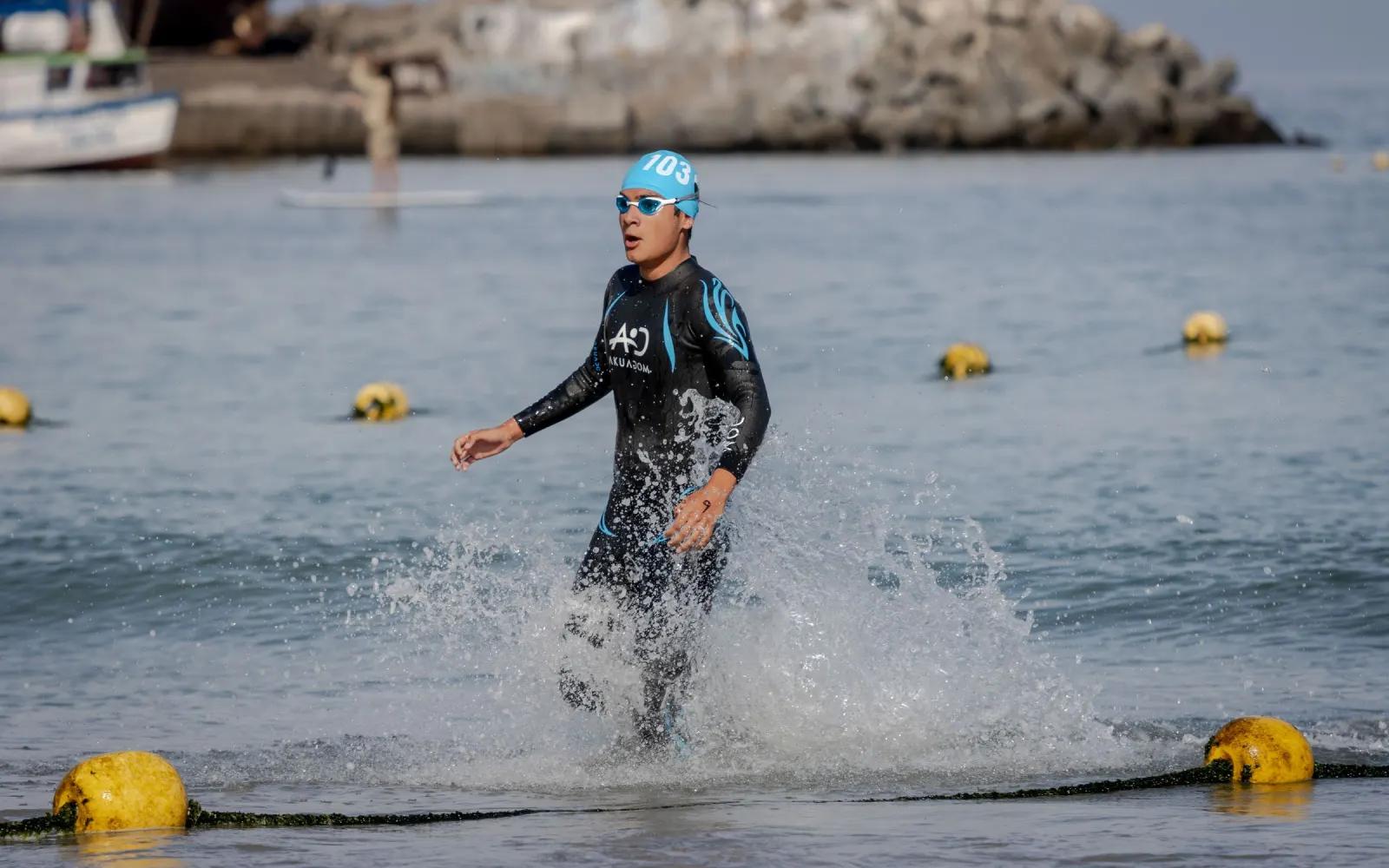
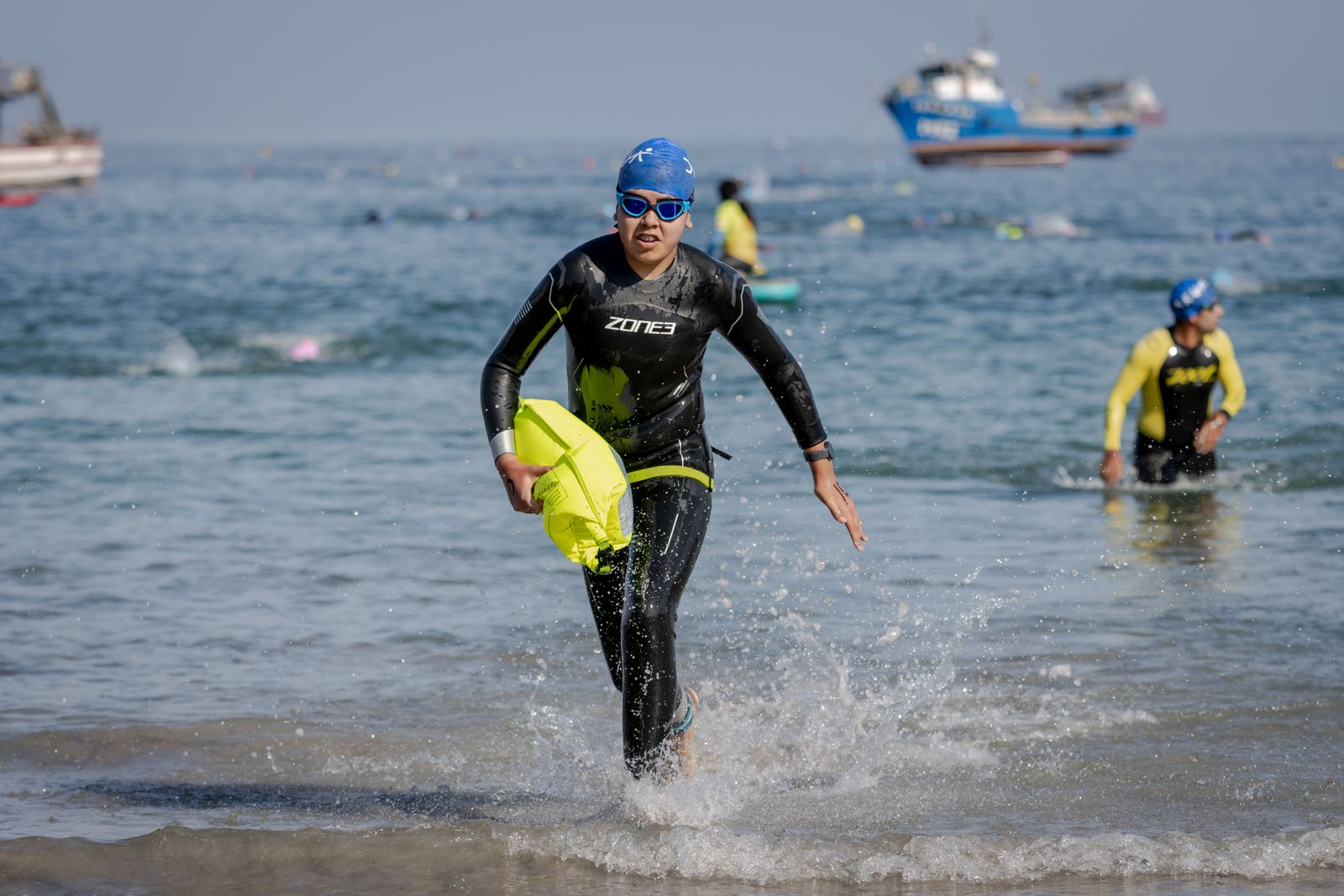
Quick answer: The opening of a triathlon swim is not a pool time trial with elbows. The goal is to claim safe water, control breathing, and reach sustainable rhythm without spending the bike leg repaying oxygen debt from the first buoy.
What the evidence actually says
Triathlon pacing research shows athletes commonly use relatively even swim pacing while bike and run patterns change with distance. A 2025 network meta-analysis across endurance sports found no consistent winner among imposed fast, even, slow, and self-selected pacing, while prolonged slow starts could hurt performance. A triathlon transition review suggests race-specific pacing should be practiced, but the evidence base remains small and context dependent.
Choose a start job, not a universal speed
A confident front-pack swimmer may need 20–40 seconds of strong, technically clean swimming to secure feet. A mid-pack athlete often gains more by starting to the side, protecting stroke space, and building over the first minute. A nervous novice should prioritize exhalation and direction. “Fast” is useful only when it buys position without breaking form.
Use the first 400 meters in phases
For the first 50–100 meters, accelerate within control and keep the kick compact. During the next minute, lengthen the exhale, soften the hands, and verify direction. By 300–400 meters, settle near the practiced race effort, choose feet or clear water, and check that the effort matches the event distance. This is a script, not a stopwatch prison.
Read breathing and contact correctly
Contact can spike effort even when pace barely changes. If breathing becomes ragged, protect space, reduce kick amplitude, and lengthen the exhale rather than stopping abruptly in traffic. Sight after contact or a pace change. Panic, wheeze, chest pain, or inability to regain breathing control is a safety problem, not a character test; signal for help when needed.
Practice starts that resemble racing
In a supervised group, perform six starts of 90 seconds: 20 seconds assertive, 40 seconds settling, 30 seconds sustainable. Rotate inside, outside, and behind positions. Record stroke quality, contact, direction, and RPE rather than celebrating the athlete who wins warm-up. Open-water practice requires appropriate supervision, visibility, and local safety procedures.
How to test this without fooling yourself
Good coaching separates a useful experiment from a new habit. Hold the course, equipment, fueling, and preceding training as steady as practical; record the result; then repeat before changing the plan. One excellent day proves possibility, not reliability. One poor day may reflect sleep, illness, weather, or accumulated load rather than the idea itself.
Coach’s field checklist
- Choose front, side, or rear positioning before entering the corral.
- Practice a 90-second start-and-settle pattern in safe conditions.
- Sight independently instead of outsourcing navigation to the pack.
- Signal for help if breathing or safety does not normalize promptly.
Common mistakes
- Changing several variables at once and crediting the favorite one.
- Copying an elite protocol without matching context.
- Treating a small study average as an individual promise.
- Waiting until race week to test execution.
- Ignoring sleep, energy availability, illness, pain, and training load.
Coach’s bottom line
Use evidence to frame a controlled decision, then let repeatable athlete response decide whether it earns a permanent place. The goal is a plan that still works when goggles fog, bottles bounce, and the legs begin submitting formal complaints.
FAQ
Should I sprint the first 200 meters?
Only if that effort is practiced, technically sound, and earns useful position. Many age-groupers race better with a firm but controlled start.
Is even pacing always best?
No single imposed pattern wins in every context. Distance, current, pack position, and the athlete’s skill change the decision.
How do I calm breathing after contact?
Create space, reduce kick demand, focus on continuous exhalation, and sight. Stop and seek support if distress persists.
Where should a nervous swimmer start?
Often to the side or rear of the wave, where clean water can matter more than a few seconds at the line.
Related AltaBrio guides
- Triathlon Training Zones
- Weekly Triathlon Training Plan
- Triathlon Race Rehearsal
- Triathlon Durability
Image suggestions
Hero image: Adult age-group triathlete and coach practicing triathlon swim start pacing.
Alt text: “Triathlete and coach practicing triathlon swim start pacing.”
Supporting graphic: Evidence, rehearsal, measurement, and decision steps.
Alt text: “Four-step decision process for triathlon swim start pacing.”
Sources
- Pacing strategies across triathlon distances. Accessed October 27, 2026.
- Comparative effects of pacing strategies meta-analysis. Accessed October 27, 2026.
- Swim-to-cycle transition review. Accessed October 27, 2026.