Quick answer: When two workouts share a day, recovery is a countdown, not a product category. The priorities are replacing the fuel and fluid the second session needs, eating tolerable food soon enough, and deciding whether the second workout still deserves to be hard.
What the evidence actually says
A meta-analysis of 29 trials found carbohydrate improved short-term muscle-glycogen resynthesis, while adding protein did not improve resynthesis when carbohydrate energy was matched. Reviews commonly suggest roughly 1.0–1.2 g/kg/hour of carbohydrate during the first few hours when rapid restoration is truly required. An umbrella review found no single recovery modality consistently improves recovery in endurance athletes, so sleep, food, fluid, and scheduling outrank gadget collecting.
Decide whether rapid refueling is required
A recovery spin followed by an easy swim does not need the same plan as intervals followed four hours later by a long run. Rank the second session: key, supportive, or optional. When it is key and the first session depleted glycogen, begin carbohydrate promptly. When the gap is long or the second session is easy, normal meals can usually do the work.
Build the first hour around tolerance
Cool down, change wet clothes, and eat a carbohydrate-rich meal or snack you know sits well. Add a normal protein serving for repair and satiety. Rehydrate according to measured body-mass change, thirst, urine, weather, and sodium losses; avoid forcing liters beyond need. Athletes with kidney, heart, metabolic, or fluid-balance conditions require clinical guidance.
Use the gap instead of filling it with chores
Reduce standing, restore body temperature, and take 20–30 quiet minutes when life allows. Prepare the second kit immediately so forgotten shoes do not become the day’s training stimulus. Caffeine can mask fatigue and disturb later sleep; it is not a substitute for an honest readiness check. Compression or cooling may feel useful, but evidence is inconsistent.
Run a readiness gate before session two
Check resting symptoms, appetite, hydration, mood, warm-up response, and whether pace or power is appropriate at normal RPE. Downgrade or stop for illness, dizziness, unusual breathlessness, focal pain, or coordination changes. Completing two mediocre hard sessions is not automatically better than protecting one good workout and tomorrow’s training.
How to test this without fooling yourself
Good coaching separates a useful experiment from a new habit. Hold the course, equipment, fueling, and preceding training as steady as practical; record the result; then repeat before changing the plan. One excellent day proves possibility, not reliability. One poor day may reflect sleep, illness, weather, or accumulated load rather than the idea itself.
Coach’s field checklist
- Classify the second workout as key, supportive, or optional.
- Start carbohydrate early when the recovery window is under four hours.
- Include fluid, sodium as appropriate, and a normal protein serving.
- Downgrade the second session when symptoms or warm-up response are abnormal.
Common mistakes
- Changing several variables at once and crediting the favorite one.
- Copying an elite protocol without matching context.
- Treating a small study average as an individual promise.
- Waiting until race week to test execution.
- Ignoring sleep, energy availability, illness, pain, and training load.
Coach’s bottom line
Use evidence to frame a controlled decision, then let repeatable athlete response decide whether it earns a permanent place. The goal is a plan that still works when goggles fog, bottles bounce, and the legs begin submitting formal complaints.
FAQ
How much carbohydrate should I eat?
When rapid glycogen restoration is essential, research commonly uses about 1.0–1.2 g/kg/hour for the first few hours, adjusted for tolerance and total needs.
Does adding protein refill glycogen faster?
Not when carbohydrate intake and energy are already matched, according to the meta-analysis; protein still supports repair and meal quality.
Should I use an ice bath?
No recovery modality works consistently for every endurance athlete. Use cooling strategically, not instead of food, fluid, and sleep.
What if I cannot eat solid food?
Use a familiar drink, smoothie, cereal, yogurt, rice, fruit, or other tolerable carbohydrate-rich option, then follow with a meal.
Related AltaBrio guides
- Triathlon Training Zones
- Weekly Triathlon Training Plan
- Triathlon Race Rehearsal
- Triathlon Durability
Image suggestions
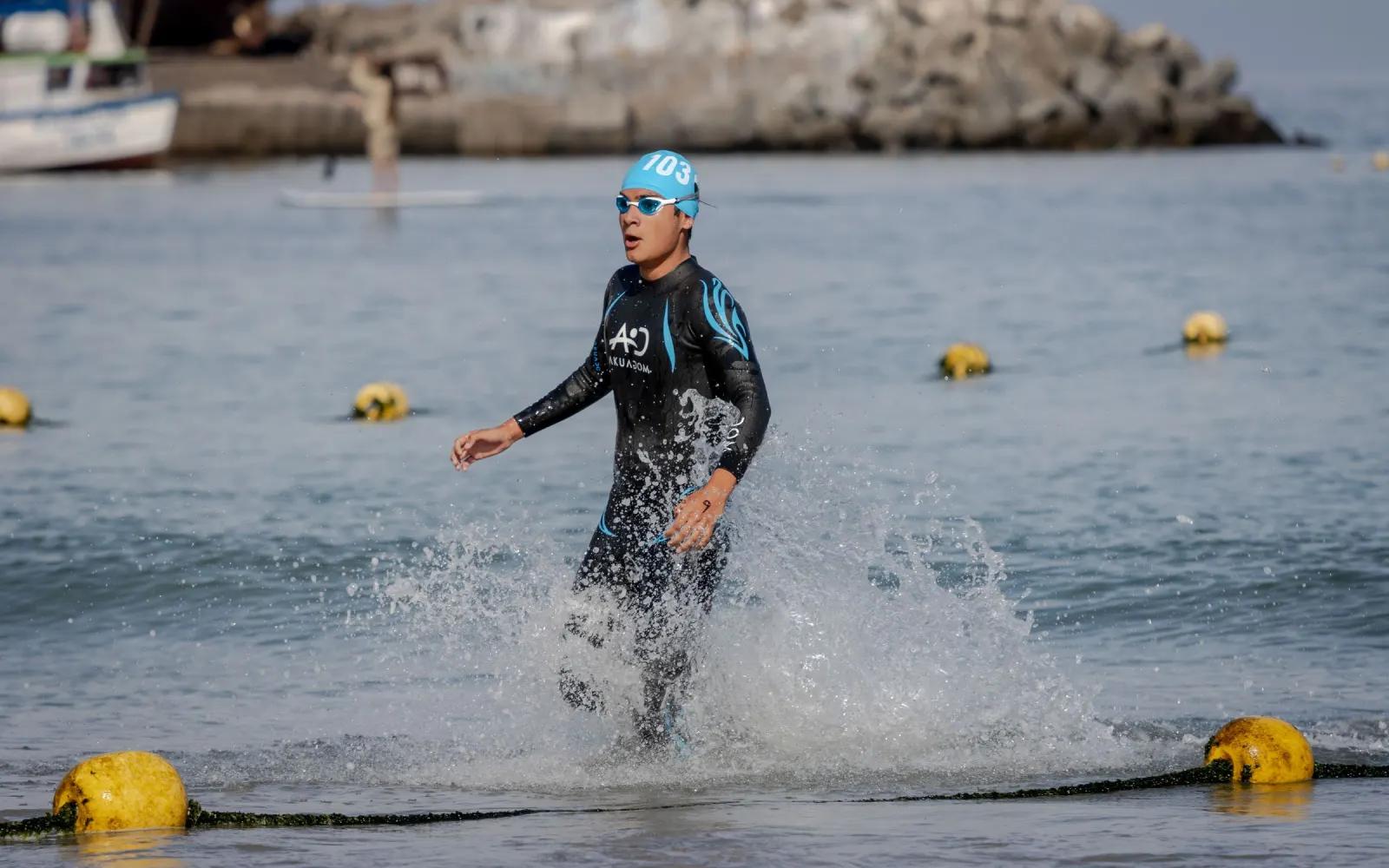
Hero image: Adult age-group triathlete and coach practicing two-a-day triathlon recovery.
Alt text: “Triathlete and coach practicing two-a-day triathlon recovery.”
Supporting graphic: Evidence, rehearsal, measurement, and decision steps.
Alt text: “Four-step decision process for two-a-day triathlon recovery.”
Sources
- Carbohydrate with or without protein and glycogen resynthesis. Accessed October 27, 2026.
- Carbohydrate intake in exercise recovery. Accessed October 27, 2026.
- Recovery strategies in endurance athletes umbrella review. Accessed October 27, 2026.