Quick answer: Drafting in the swim can reduce drag and physiological cost, but the fastest water is useless when the lead swimmer is off course. Good drafting combines position, matching speed, clean technique, frequent navigation, and the willingness to leave feet that are either too slow or aggressively optimistic.
What the evidence actually says
A classic study in trained triathletes found a roughly 3.2% faster 400 m performance when drafting directly behind another swimmer, with lower lactate and stroke rate. Follow-up work found the greatest passive-drag reductions at zero to 50 cm behind the leader’s toes; lateral benefit was smaller around 50–100 cm behind the leader’s hands. These are small controlled studies, so treat the numbers as direction, not a guaranteed race discount.
Choose feet or hip
Directly behind the feet usually offers the largest benefit but includes bubbles, occasional contact, and less forward visibility. A lateral position near the hip or slightly behind the hands offers more sighting freedom and an easier exit, with a smaller draft. Stay clear of another swimmer’s arms and legs. Drafting is race craft, not aquatic tailgating.
Draft without outsourcing navigation
Sight on a schedule and after every major contact or pace change. Check both the buoy and the pack’s direction. In current or chop, the geometrically shortest line may not be the fastest line, but following one wandering swimmer is rarely the solution. Use landmarks above the water when buoys disappear in glare or swell.
Practice the skill in a group
In a safe supervised venue, rotate leaders through 4 × 4 minutes at steady race effort. Practice 30 seconds on feet, 30 seconds at the hip, and 30 seconds in clear water. Record pace, stroke rate, RPE, contact, and navigation errors. Add starts and buoy turns later; first learn to hold a legal, calm position.
Know when to leave
Exit a draft when the leader surges beyond sustainable effort, slows below goal pace, repeatedly crosses your line, or navigates poorly. Accelerate smoothly into clean water or bridge to a nearby group; a ten-second anaerobic lunge can cost more than it saves. Race rules and safety instructions always override tactics.
Coach’s field checklist
- Practice feet and lateral positions before race day.
- Sight independently and verify direction after contact or turns.
- Match a sustainable swimmer instead of chasing the fastest feet.
- Avoid grabbing, pushing, striking, or crowding another athlete.
Common mistakes
- Changing several variables at once and crediting the favorite one.
- Copying an elite protocol without matching context.
- Treating a laboratory average as an individual promise.
- Waiting until race week to test execution.
- Ignoring sleep, energy availability, illness, and training load.
Coach’s bottom line
Use evidence to frame a controlled decision, then let repeatable athlete response decide whether the idea earns a permanent place. The goal is a plan that still works when goggles fog, bottles bounce, and the legs begin submitting formal complaints.
FAQ
How close should I swim behind someone?
Controlled research found the largest benefit within about 0–50 cm of the toes, but safety, contact, visibility, and skill determine practical distance.
Is lateral drafting useful?
Yes, though the measured drag reduction is smaller. It can offer cleaner water and better sighting.
Should I draft a faster swimmer?
Only if the pace is sustainable. Repeated surges to stay attached can spend more energy than the draft saves.
Is swim drafting legal?
It is commonly allowed in mass-start triathlons, but athletes must follow the event’s current rules and avoid impeding or endangering others.
Related AltaBrio guides
Image suggestions
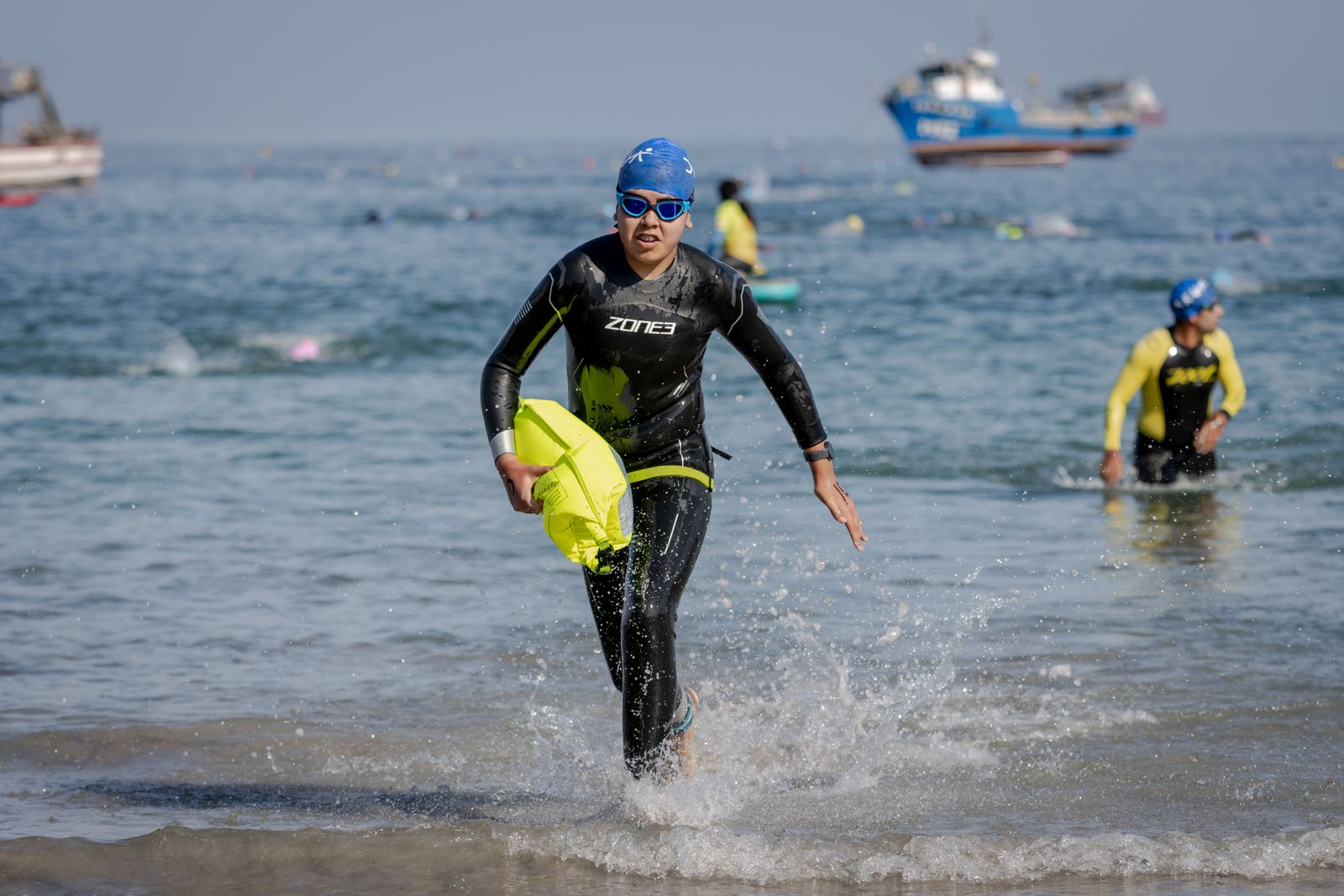
Hero image: Adult age-group triathlete and coach testing open water swim drafting triathlon.
Alt text: “Triathlete and coach testing open water swim drafting triathlon.”
Supporting graphic: Evidence, rehearsal, measurement, and decision steps.
Alt text: “Four-step decision process for open water swim drafting triathlon.”
Sources
- Performance and drag during drafting swimming in triathletes. Accessed October 24, 2026.
- Drafting distance in swimming. Accessed October 24, 2026.
- Swim positioning and triathlon outcome. Accessed October 24, 2026.